
Small Home Elevator for 2 Persons: The Ultimate Compact Accessibility Guide
As modern residential architecture shifts toward vertical space utilization, multi-story living has become increasingly common in urban townhomes, retrofitted villas, and suburban family residences. While multi-floor designs optimize property footprints, navigating staircases daily can present mobility challenges for aging residents, individuals recovering from injuries, or homeowners carrying heavy laundry and luggage. Traditionally, retrofitting a residential lift required extensive masonry shafts, subterranean pit excavation, and massive dedicated machine rooms. Today, compact engineering innovations have changed the residential mobility market completely.
Among the various residential lifting solutions available, installing a small home elevator for 2 persons has emerged as the most efficient way to achieve multi-floor transit without sacrificing precious living space. Designed specifically to accommodate two adults comfortably within a minimal footprint, these compact lifts offer modern aesthetics, robust safety protocols, and minimal civil construction demands.
Understanding the Engineering Behind Compact Residential Lifts
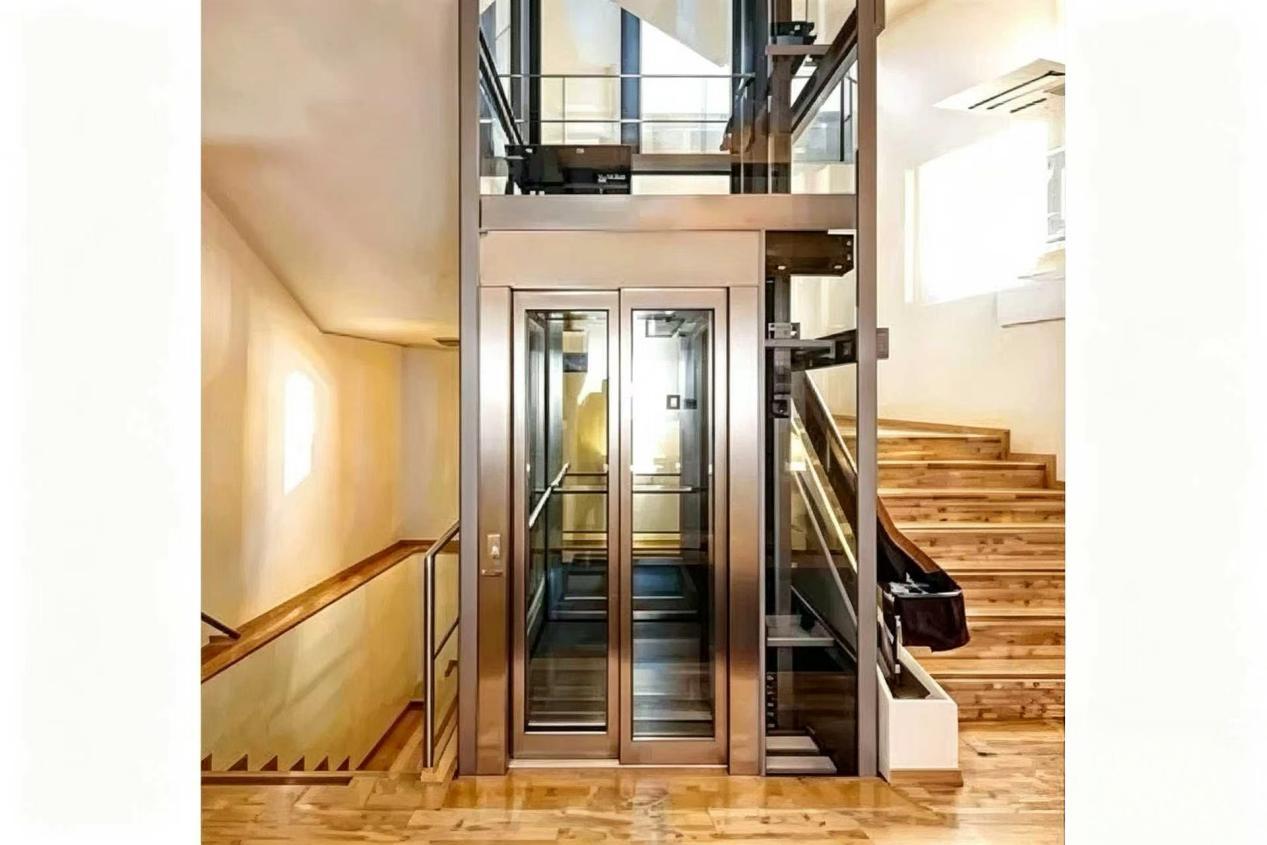
The core advantage of a small home elevator for 2 persons lies in its space-saving drive technology and modular shaft structure. Traditional commercial passenger elevators rely on bulky counterweights and subterranean oil reservoirs beneath the lowest landing. Compact residential lifts, however, utilize alternative drive mechanics—such as gearless traction drives, side-mounted screw-drive systems, or pneumatic vacuum pumps—that relocate major mechanical assemblies directly onto the guide rails or top-mounted drive housings.
By removing the need for sprawling machine rooms, a small home elevator for 2 persons fits seamlessly into previously unusable residential nooks. The lift structure mounts directly to load-bearing interior walls or utilizes a self-supporting aluminum tower, allowing the cab floor to align flush with finished floors using a subtle ramp or a shallow recess of just a few centimeters.
Essential Structural Components
Ultra-Compact Platform Base: Engineered to support two passengers (typically 200 kg to 250 kg capacity) within a footprint as small as 1 square meter.
Modular Vertical Guide Columns: Precision-machined steel or aluminum rails anchored securely to wall studs to ensure whisper-quiet, rigid travel.
Integrated Panoramic Shaft: Tempered glass or shatter-resistant acrylic shaft walls that preserve natural ambient light and maintain an open interior room feel.
Low-Power Drive Assembly: Energy-efficient motors operating on standard household single-phase electrical power with Variable Frequency Drives (VFD) for ultra-smooth acceleration and braking.
Key Benefits of Choosing a Two-Passenger Compact Lift
1. Minimal Footprint and Flexible Indoor Placement
The primary reason homeowners choose a small home elevator for 2 persons is spatial efficiency. Because the cab requires very little room, it can be retrofitted into tight interior spaces where conventional shafts are impossible. Popular placement areas include the center void of wrap-around staircases, former storage closets, or corner sections of living rooms.
2. Preservation of Structural Building Foundations
Excavating concrete pits in finished homes risks severing subterranean plumbing lines, underfloor heating grids, or structural foundation beams. Installing a surface-mounted small home elevator for 2 persons avoids invasive civil engineering, preserving foundation integrity while providing reliable vertical access.
3. Rapid Installation with Low Construction Disruption
Constructing a traditional masonry shaft can turn a home into a dusty construction site for weeks. In contrast, modular compact lifts arrive partially pre-assembled. A professional technician team can anchor, wire, and commission a small home elevator for 2 persons within three to five working days, minimizing routine disruptions for your family.
4. Long-Term Property Value and Aging-in-Place Security
Adding vertical mobility future-proofs your property. Installing a small home elevator for 2 persons allows senior family members to maintain independent living while significantly boosting resale appeal among luxury homebuyers seeking accessible modern properties.
Technical Comparison of Residential Lifting Technologies
Choosing the right compact lift configuration requires evaluating cab dimensions, budget constraints, physical home architecture, and power consumption. The table below compares common compact lift technologies suitable for two passengers.
Lift Feature | Compact Traction Lift | Pneumatic Vacuum Lift | Screw-Drive Compact Lift |
Typical Footprint Needed | ~1.0 m x 1.2 m | ~0.9 m Diameter (Circular) | ~1.1 m x 1.1 m |
Rated Payload Capacity | 200 kg – 250 kg (2 Persons) | 160 kg – 205 kg (2 Persons) | 220 kg – 300 kg (2–3 Persons) |
Pit Depth Requirement | 0 mm – 50 mm | 0 mm (Surface Mount) | 0 mm – 50 mm |
Noise Level During Travel | Ultra-Quiet (<45 dB) | Moderate Vacuum Sound | Quiet (<50 dB) |
Power Requirements | 220V Single-Phase | 220V Single-Phase | 220V Single-Phase |
Ideal Architectural Setup | Modern Homes & Stair Voids | Compact Retrofits & Open Areas | Tight Corners & Wall Mounts |
Technical Prerequisites Before Site Installation
Before purchasing a small home elevator for 2 persons, architects, contractors, and homeowners should evaluate critical architectural prerequisites to guarantee a smooth installation process:
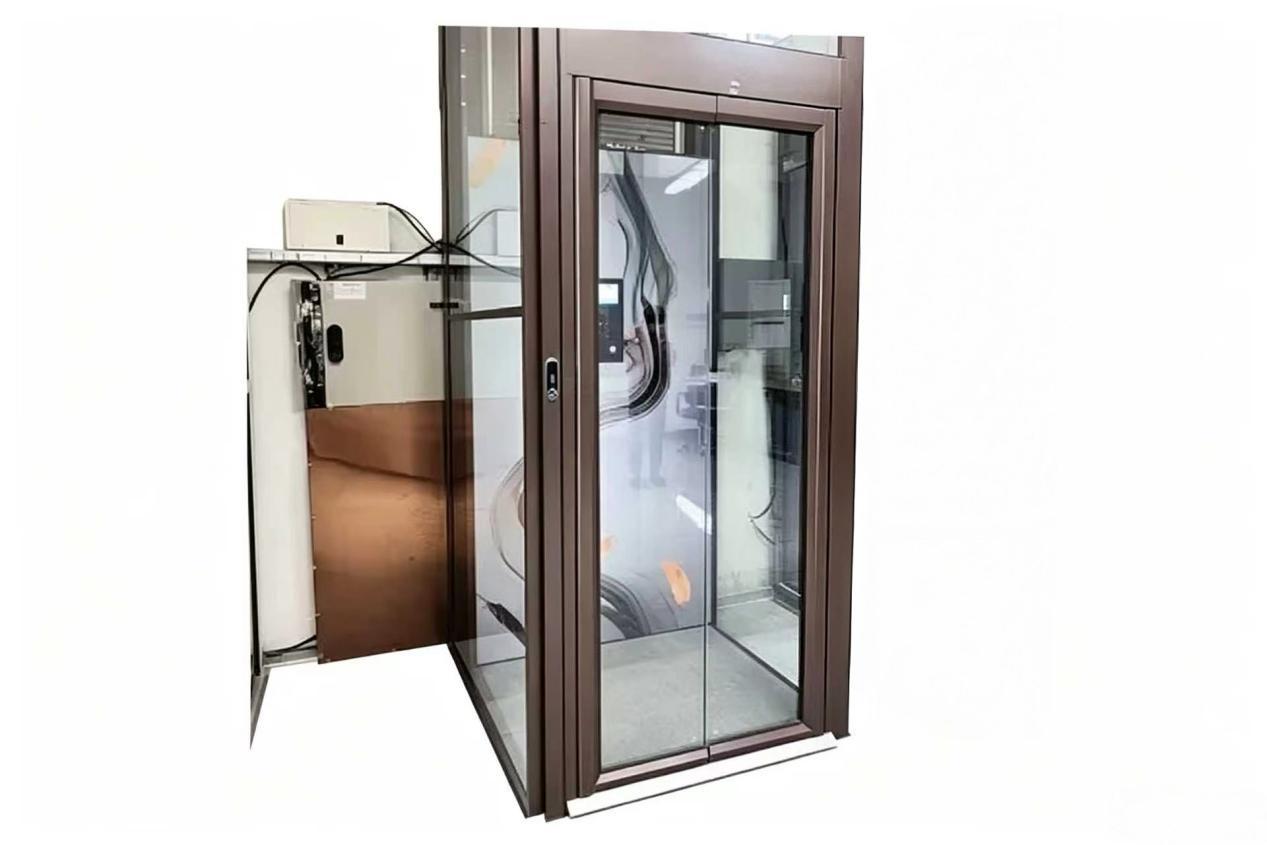
Overhead Height Clearance: While subterranean excavation is eliminated, top-floor ceiling height must accommodate the cab height and top drive assembly, typically requiring 2.4 to 2.8 meters of clear vertical clearance at the highest level.
Structural Wall Anchoring: Guide rails generate lateral forces during platform transit. Anchoring walls should consist of solid concrete, solid brick, or reinforced timber studs capable of bearing mechanical loads.
Dedicated Electrical Infrastructure: Ensure your home electrical panel supports a dedicated single-phase circuit with appropriate surge protection to handle peak motor starting current smoothly without tripping breakers.
Door Swing and Landing Clearance: Verify that landing areas on each floor have sufficient clear space for swing doors or automatic folding gates to open fully without blocking hallway traffic.
Modern Safety Standards and Code Compliance
Ensuring absolute family safety is the core priority in home lift engineering. A modern small home elevator for 2 persons must comply with international residential safety directives (such as ASME A17.1/CSA B44 in North America or EN 81-41 in Europe) and features redundant mechanical and digital safeguards:
Emergency Battery Lowering System: If a municipal power outage occurs, an integrated auxiliary battery automatically lowers the cab to the nearest lower landing level and unlocks the doors.
Under-Platform Obstruction Sensors: Pressure-sensitive bottom plates or infrared optical light curtains instantly halt movement if an object, luggage item, or pet contacts the underside of the descending cab.
Electromechanical Door Interlocks: Landing gates remain firmly locked while the cab is in motion, disengaging only when the lift docks flush at a floor zone.
Emergency Alarm and Communication Lines: Built-in hands-free telephone systems, Bluetooth intercoms, or emergency call buttons keep passengers connected directly to family members or emergency services.
Practical Application Scenarios in Modern Homes
The versatility of a small home elevator for 2 persons allows it to adapt seamlessly to diverse residential floor plans:
1. Urban Multi-Story Townhomes
Narrow, multi-floor townhouses spread daily activities across three or four floors. Installing a compact lift connects entryways, kitchens, and master bedrooms without taking up valuable living floor area.
2. Retrofitting Existing Family Villas
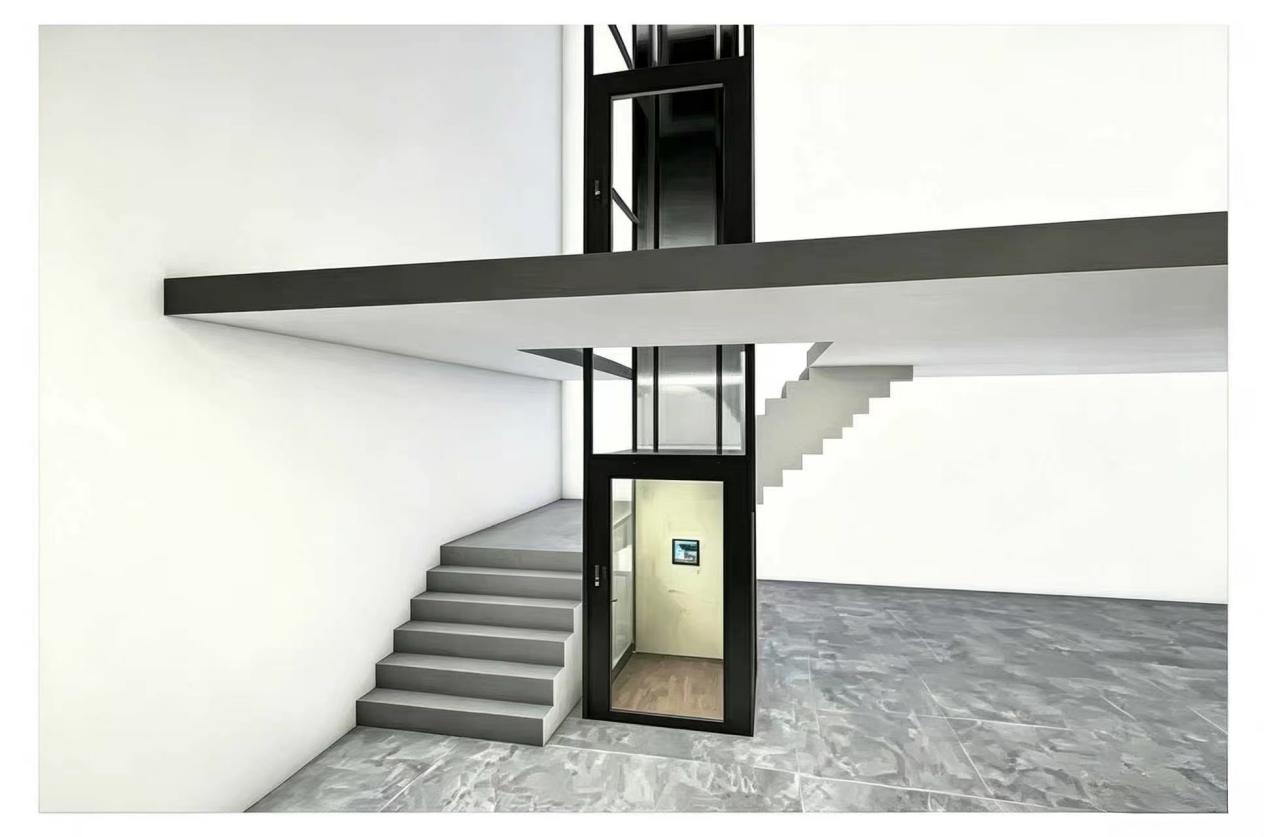
Homeowners wishing to update their existing villa can insert a small home elevator for 2 persons through existing floor cutouts or inside stairwell voids, upgrading accessibility without altering room layouts.
3. Coastal Homes with High Water Tables
In coastal regions where high water tables make digging deep elevator pits impossible due to flooding risks, a surface-mounted small home elevator for 2 persons eliminates subterranean waterproofing hazards entirely.
Maintenance Protocols for Long-Term Equipment Health
Routine preventative maintenance ensures that your small home elevator for 2 persons operates smoothly, quietly, and safely for decades:
Quarterly Visual Inspections: Test emergency stop controls, verify bottom obstruction pan sensitivity, check door interlock alignment, and inspect cabin lighting.
Semi-Annual Mechanical Servicing: Certified technicians should lubricate guide rail tracks, inspect drive cables or screw shafts, check drive motor brake pads, and audit VFD controller parameters.
Annual Battery and Electrical Audits: Test emergency lowering battery health under load and check control panel electrical connections to ensure long-term system stability.
Frequently Asked Questions (FAQ)
Q1: How much total space is required for a small home elevator for 2 persons?
Most compact two-passenger models require a physical footprint of roughly 1 square meter (approximately 1.0 meter by 1.2 meters). Their space-saving design allows them to fit into former closets, hallway corners, or stairwell voids easily.
Q2: Is a small home elevator for 2 persons noisy during daily operation?
Modern home lifts utilize gearless traction motors or refined hydraulic systems engineered specifically for residential environments, operating at whisper-quiet sound levels below 50 decibels.
Q3: What happens if there is a home power outage while someone is inside?
All quality small home elevator for 2 persons models feature automatic emergency lowering systems powered by backup batteries. In a power failure, the lift automatically descends to the lowest landing floor, opens the doors, and allows passengers to exit safely.
Q4: Can a small home elevator for 2 persons carry a wheelchair?
Standard two-person compact models are designed for standing passengers or an adult with luggage. If full wheelchair accessibility is required, a slightly larger model with a wider door opening and platform size is typically recommended.
Conclusion and Technical Support
For property owners seeking seamless vertical mobility without invasive construction or sacrificing valuable indoor space, a small home elevator for 2 persons offers the ideal combination of modern engineering and interior design elegance. By maximizing vertical space and preserving structural foundations, these compact lifts elevate everyday convenience, safety, and property value.
For personalized technical planning, site feasibility checks, or direct factory pricing on a custom small home elevator for 2 persons, contact our engineering team today:
Phone / WhatsApp: +86 189 5417 1380
Email: info@tebolift.com
Country*
*Email*
*Address
Name*
*Phone*
*City
Message
*

