
Modern Home Elevators: Design, Cost & Smart Guide
When you hear the words “home elevator,” what comes to mind? A clunky metal box from a hospital corridor? A noisy, slow machine that belongs in an office building? That image is about twenty years out of date. Today’s modern home elevators are something else entirely. They are sleek, quiet, space-efficient, and designed to complement contemporary architecture — not hide from it.
Whether you are building a new custom home, renovating a multi-story townhouse, or planning for aging in place, understanding what makes modern home elevators different from traditional lifts will help you make a smarter design decision. This guide covers the latest technologies, design options, space requirements, costs, and installation considerations for modern home elevators in 2026 and beyond.
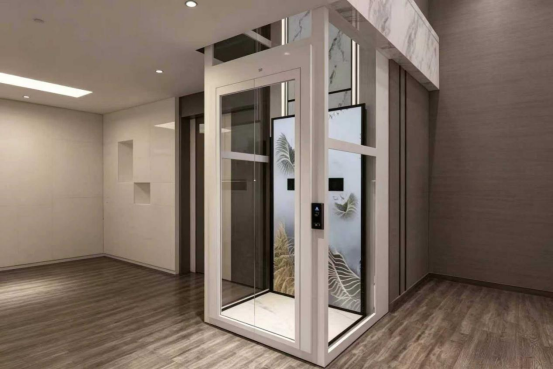
What Defines a Modern Home Elevator?
A modern home elevator is not just a small freight lift painted beige. It is a purpose‑built residential lifting system that prioritizes three things: space efficiency, design flexibility, and quiet, reliable operation.
Compared to traditional hydraulic or traction elevators adapted from commercial buildings,modern home elevators typically feature:
· Machine‑room‑less (MRL) design– no separate motor room needed
· Shallow or zero pit depth– easier retrofitting into existing homes
· Glass or panoramic shafts that become architectural features
· Smart controls with remote monitoring and voice compatibility
· Customizable finishes that match your interior design
In short,modern home elevators are designed to be seen, not hidden. They add value, style, and accessibility to any multi-story home.
Modern Home Elevators vs. Traditional Elevators: A Clear Comparison
The table below highlights the key differences between modern home elevators and conventional residential lifts. If you are still deciding which direction to go, this comparison will help.
Feature | Modern Home Elevators | Traditional Home Elevators |
Pit depth | 0–10 cm (zero or shallow pit) | 20–50 cm (deep pit required) |
Machine room | Not needed (MRL design) | Often requires separate room |
Shaft material | Glass, aluminum, or minimalist steel | Concrete or heavy masonry |
Noise level | <55 dB (quieter than conversation) | 60–70 dB (noticeable hum) |
Control system | Touchscreen, app, voice | Physical buttons only |
Installation time | 3–7 days | 2–4 weeks |
Design flexibility | High – custom finishes, lighting, glass | Low – standard cab sizes, limited options |
Typical cost range | $15,000 – $40,000 | $20,000 – $50,000+ |
As you can see,modern home elevators are not just prettier. They are also easier to install, take up less space, and offer more smart features than their older counterparts.
Three Major Design Trends in Modern Home Elevators
1. Glass Shaft and Panoramic Views
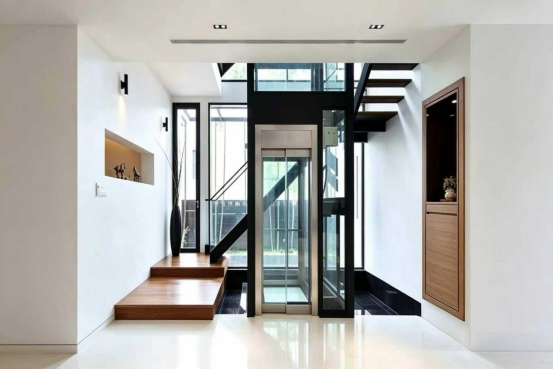
One of the most visible trends in modern home elevators is the use of glass shafts. Instead of hiding the lift inside a concrete box, architects now place it in a transparent tube. This turns the elevator into a moving art piece — a vertical glass column that brings light into the center of the home.
Glass modern home elevators work especially well in open‑plan houses. They create a sense of connection between floors without blocking sightlines. For safety, the glass is tempered and laminated, and low‑iron glass options eliminate the green tint found in standard glass.
2. Pitless and Low‑Pit Technology
The biggest barrier to installing a home elevator used to be the pit. Traditional lifts required digging 20 to 50 centimeters into the foundation — a deal‑breaker for many existing homes. Today’s modern home elevators solve this with pitless or shallow‑pit designs.
Screw‑drive and pneumatic (vacuum)modern home elevators need zero pit depth. They sit directly on the finished floor with a low ramp or a small threshold. Hydraulic and traction models now offer shallow pits as little as 5 to 10 centimeters. This makes modern home elevators a realistic option for retrofits, townhouses, and homes with slab‑on‑grade foundations.
3. Smart Controls and Connectivity
Your home is smart. Your elevator should be too.Modern home elevators now come with features you would expect from high‑end home automation:
· Smartphone app– call the lift to any floor, check status, or schedule maintenance
· Voice control– compatible with Alexa, Google Home, or Siri
· Remote diagnostics– the supplier can test safety systems and predict issues before they cause downtime
· Automatic lowering– during power outages, the lift safely descends and opens doors
These smart features are no longer expensive add-ons. Many mid‑range modern home elevators include basic connectivity as standard.
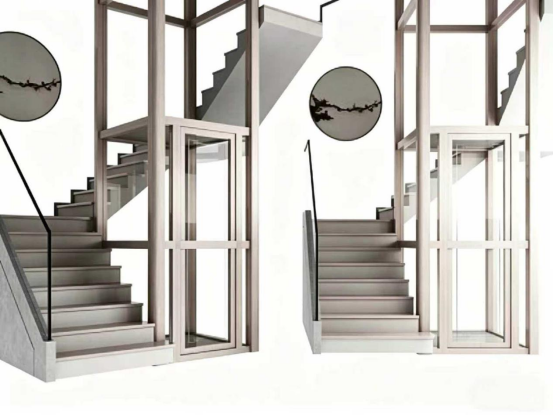
Materials and Finishes: Making Your Elevator Match Your Home
One reason modern home elevators have become so popular is the range of customization. You can choose finishes that make the lift blend in — or stand out.
Wall Finishes
· Stainless steel(brushed, mirror, or black coated) for an industrial look
· Laminated glass with frosted or printed patterns for privacy
· Wood veneer(oak, walnut, maple) for warmth in traditional or transitional homes
· Leather or fabric panels for a soft, luxury feel
Lighting
· LED strip lighting along the ceiling or base for a floating effect
· Backlit mirrors to make small cabs feel larger
· Color‑changing lights for a modern, playful touch
Control Panels
· Flush‑mount touchscreens that sit flat against the wall
· Minimalist metal buttons with subtle backlighting
· Hidden panels that slide open only when needed
With modern home elevators, you are not stuck with a standard “elevator look.” You can match the cab to your kitchen cabinets, your staircase railing, or your wall colors.
Which Type of Modern Home Elevator Fits Your Home?
Not all modern home elevators use the same technology. Here is a quick guide based on your home type.
Home Type | Recommended Modern Elevator Type | Why |
Townhouse (3–4 stories) | Screw‑drive or pneumatic | Zero pit, small footprint, easy retrofit |
New custom villa | Traction with glass shaft | Smooth ride, design flexibility, future‑proof |
Aging‑in‑place renovation | Low‑pit hydraulic | Stable platform, gentle start/stop, high safety margin |
Small footprint / tight space | Pneumatic (vacuum) | No shaft walls, fits into a 90x90 cm corner |
Luxury / high‑end design | Custom traction or hydraulic | Full material and lighting customization |
Your local building codes and available space will also influence the choice. A good supplier will ask for your floor plan and recommend two or three options from the modern home elevators category.
Three Things to Know Before Installing a Modern Home Elevator
1. Space Requirements Are Smaller Than You Think
The smallest modern home elevator needs only about 90 cm × 90 cm (35 × 35 inches) of floor space. That is roughly the size of a small coat closet. For a more comfortable ride (including wheelchair access), look for 110 cm × 140 cm (43 × 55 inches). Measure your available area and remember that glass shaft modern home elevators can sit against a wall or in a corner without needing extra clearance for maintenance.
2. Power Supply Is Usually Simple
Most modern home elevators run on standard single‑phase 220V or 110V power. That means no expensive electrical upgrade. The control panel and drive unit draw about the same power as a large refrigerator or a clothes dryer. However, always confirm with your supplier — some heavy‑duty hydraulic models may require three‑phase.
3. Budget Ranges and Hidden Costs
A quality modern home elevator costs between $15,000 and $40,000 for the equipment, depending on type, number of stops, and finishes. Installation adds $5,000 to $15,000, but pitless designs reduce this significantly. Annual maintenance runs $500 to $1,500. Ask for a turnkey quote that includes delivery, installation, and first‑year service. Some suppliers of modern home elevators also offer remote installation guidance to save on local contractor fees.
Frequently Asked Questions (FAQ)
Q1: What makes a home elevator “modern” compared to traditional models?
Modern home elevators feature glass shafts, pitless installation, machine‑room‑less design, smart controls, and customizable finishes. Traditional models often require deep pits, separate machine rooms, and offer limited design options.
Q2: Can a modern home elevator be installed without a pit?
Yes. Screw‑drive and pneumatic modern home elevators require zero pit depth. Some hydraulic models now offer shallow pits as little as 5 cm. Always check with your supplier for site‑specific requirements.
Q3: Are glass shaft modern home elevators safe for children and pets?
Absolutely. The glass used is tempered and laminated, similar to car windshields or shower doors. It is very strong and, if broken, holds together in a spiderweb pattern rather than shattering. Additionally, modern home elevators include door interlocks and safety sensors that stop the lift if anything enters the doorway.
Q4: How much do modern home elevators cost in 2026?
Expect $15,000 to $40,000 for the equipment, plus $5,000 to $15,000 for installation. Pitless designs are on the lower end of installation cost. Annual maintenance is typically $500–$1,500.
Q5: Can I customize the look of a modern home elevator to match my interior design?
Yes — and this is one of the main selling points. You can choose glass, stainless steel, wood veneer, or even leather wall panels. Lighting and control panels are also customizable. Most modern home elevator manufacturers offer a wide range of standard finishes and full custom options.
Q6: Do modern home elevators require a lot of maintenance?
No. Routine maintenance includes checking hydraulic fluid (for hydraulic models), testing safety devices, lubricating moving parts, and inspecting door seals. Professional service once every 6–12 months is sufficient. Screw‑drive and pneumatic modern home elevators have even lower maintenance needs.
Q7: What is the smallest modern home elevator available for a townhouse?
The smallest pneumatic (vacuum) modern home elevator fits into a 90 cm × 90 cm footprint. Screw‑drive models are slightly larger but still under 100 cm × 100 cm. Both are excellent choices for narrow townhouses.
Conclusion: Elevate Your Home with a Modern Lift
A modern home elevator is not a luxury for the ultra‑rich anymore. It is a practical, stylish, and increasingly affordable addition to any multi‑story home. Whether you are planning for retirement, building your dream house, or simply tired of carrying laundry up two flights of stairs, today’s modern home elevators offer a solution that adds value, safety, and everyday convenience.
The key is to start with good information. Understand your space, your power supply, and your design preferences. Then choose a supplier who offers transparent pricing, clear safety certifications (CE, ISO, EN 81‑41), and real after‑sales support. A well‑chosen modern home elevator will serve your family for 20 years or more.
Ready to see what a modern home elevator looks like in your space?
Send us a photo of your staircase or a rough floor plan. We will create a free 3D concept showing how a glass or panoramic modern home elevator would fit into your home.
Phone / WhatsApp:+86 189 5417 1380
Email:info@tebolift.com
We provide global shipping, installation drawings, video guidance, and lifetime remote support for all modern home elevators.
Country*
*Email*
*Address
Name*
*Phone*
*City
Message
*

