
Home Elevator Systems: The Ultimate Guide to Residential Lifts
A home elevator system is a complete set of equipment designed for residential use to transport people and goods vertically between floors. It consists of a drive mechanism, control system, cab, and doors. Different home elevator systems vary significantly in installation requirements, space needs, and how they feel to use day to day. The most common types today are hydraulic, traction, screw drive, and pneumatic. Each type suits different home layouts and budget ranges. Understanding the differences between these systems is the first step toward choosing the right one for your home.
This guide walks you through the key features of each system, how they're installed, and what they typically cost—so you can make a confident decision.

What Are Home Elevator Systems?
A home elevator system is a complete vertical transportation solution designed specifically for residential use. Unlike commercial elevators built for heavy traffic,home elevator systems are scaled for home life: quieter, more compact, and finished to match your interior. They typically serve 2 to 5 floors and are designed for daily family use.
What sets home elevator systems apart is their integration of multiple components: the drive mechanism, control system, safety features, and cabin design all work together as a single, engineered unit. When you invest in a quality home elevator system, you're getting more than just a lift—you're getting a carefully designed solution that prioritizes safety, comfort, and reliability.
Types of Home Elevator Systems
Different home elevator systems use different drive technologies. Each has its own strengths, limitations, and price points. The table below compares the most common types available today.
Drive Type | How It Works | Best For | Cost Range | Key Features |
Hydraulic | Fluid-driven piston lifts the cab | Smooth ride, heavy loads, 2-4 floors | $20,000 – $50,000 | Quiet operation, high capacity, requires machine room and pit |
Traction | Steel ropes and counterweights | Taller homes (3-6 floors), energy efficiency | $35,000 – $70,000 | Faster speeds, energy-efficient, needs overhead space |
Screw Drive | Rotating threaded rod moves the cab | Low maintenance, 2-3 floors, retrofits | $25,000 – $45,000 | Simple design, self-supporting, no machine room needed |
Pneumatic (Vacuum) | Air pressure moves the cab | Modern homes, tight spaces, quick install | $40,000 – $80,000 | No pit or machine room, self-supporting, stunning glass design |
Platform Lift | Open platform moves vertically | Wheelchair access, short rises | $8,000 – $18,000 | Most affordable, simple installation, open design |
Hydraulic Home Elevator Systems
Hydraulic home elevator systems have been the traditional choice for residential applications for decades. They use a pump to push fluid into a cylinder, which moves a piston that lifts the car. This "push from below" design provides exceptionally smooth operation and can handle heavier loads than many other types.
Advantages: Hydraulic home elevator systems offer the smoothest ride available, making them a great choice for seniors or anyone with balance concerns. They handle heavy loads well—up to 1,400 pounds in some models. Installation costs are relatively low compared to traction systems, and they operate quietly.
Limitations: These systems require a separate machine room for the pump and a pit below the lowest floor. They use more energy than traction systems, and hydraulic fluid can leak over time. Regular maintenance is needed to check fluid levels and seal integrity.
Best for: Homes with available space for a machine room and pit, families prioritizing ride comfort, and households with heavy loads.
Traction Home Elevator Systems
Traction home elevator systems use steel ropes or belts attached to the car, which run over a sheave driven by an electric motor. A counterweight balances much of the car's weight, making these systems highly energy-efficient. Modern traction home elevator systems often use machine-room-less (MRL) designs that place the drive machinery directly in the hoistway.
Advantages: Traction systems are the most energy-efficient option, with some models featuring regenerative drives that actually generate electricity during descent. They're faster than hydraulic systems and can serve taller buildings with more floors. MRL designs eliminate the need for a separate machine room.
Limitations: The initial cost is higher than hydraulic systems. They require overhead space for the drive machinery, and installation is more complex. The counterweight and cables need periodic inspection and replacement.
Best for: Taller homes with 3-6 floors, energy-conscious homeowners, and modern construction where overhead space can be accommodated.
Screw Drive Home Elevator Systems
Screw drive home elevator systems use a rotating threaded rod (the screw) to move a nut attached to the cab. This mechanical system is elegantly simple, with very few moving parts. The screw is typically mounted in the center of the shaft, and the cab rises and falls as the screw rotates.
Advantages: Screw drive systems have minimal maintenance requirements—just occasional lubrication of the screw. They're self-supporting, requiring no machine room and minimal pit depth. The design is simple and reliable, with fewer components that can fail. They operate on standard household power.
Limitations: These systems are slower than hydraulic or traction options. They're generally limited to 2-3 floors and have lower weight capacities. Some models can be noisier during operation.
Best for: Budget-conscious buyers, smaller homes, retrofits where construction needs to be minimal, and homeowners who prioritize low maintenance.
Pneumatic (Vacuum) Home Elevator Systems
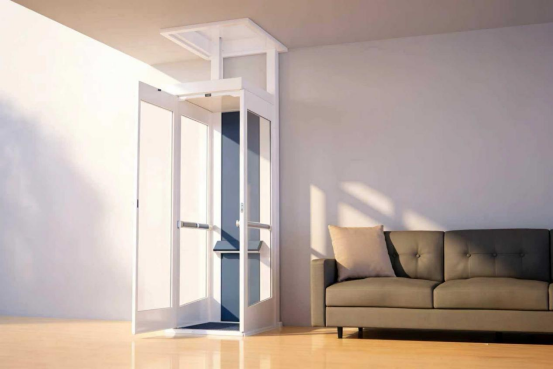
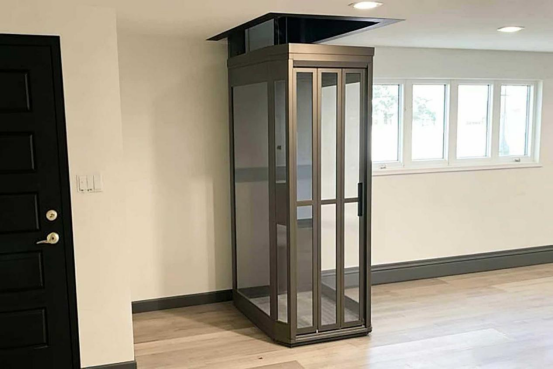
Pneumatic home elevator systems are the newest technology in residential lifts. They consist of a self-supporting cylindrical tube—typically made of transparent polycarbonate or glass—with a cab that moves via air pressure. Fans at the top create a vacuum above the cab while pressure below pushes it upward.
Advantages: These systems require no pit, no machine room, and no shaft. Installation can be completed in just 2-3 days with minimal disruption. The transparent design creates a stunning visual effect and allows panoramic views during the ride. They're energy-efficient, using power only during ascent.
Limitations: Pneumatic home elevator systems have lower weight capacities (typically 350-525 lbs) and are limited to 2-5 stops. The cab size is smaller than traditional elevators, and they come with a premium price tag.
Best for: Modern homes where design matters, tight spaces where traditional elevators won't fit, and homeowners wanting a quick, low-impact installation.
Platform Lifts
Platform lifts are the simplest home elevator systems, designed primarily for wheelchair accessibility. They consist of an open platform that moves vertically along guide rails. These are often called vertical platform lifts (VPLs) and are commonly used for short rises like porch access or basement entries.
Advantages: Platform lifts are the most affordable option, starting around $8,000. Installation is simple, often requiring no pit and minimal electrical work. They're ideal for ADA compliance and can be used indoors or outdoors.
Limitations: They're not fully enclosed elevators, so they offer less privacy and protection from the elements. Travel height is limited, typically under 14 feet. They're slower and may not add significant home value compared to full-cabin systems.
Best for: Budget-conscious projects, outdoor access, homeowners primarily needing wheelchair accessibility.
Key Specifications to Consider
When evaluating home elevator systems, pay attention to these specifications:
Load Capacity: Most residential elevators handle 500 to 1,400 pounds. For reference, a 500-pound capacity accommodates 2-3 people. Wheelchair users typically need at least 750 pounds.
Platform Size: Standard residential cabs range from 36×48 inches to 48×60 inches. Wheelchair access requires a minimum of 36×48 inches with a 32-inch door opening.
Travel Height: How many floors does the elevator need to serve? Most residential home elevator systems handle 2-5 floors, with travel heights up to 50 feet.
Power Requirements: Hydraulic and traction systems often need 220-240V power. Pneumatic and screw drive systems typically run on standard 110V household current.
Installation Considerations
The installation complexity of home elevator systems varies significantly by type:
· Hydraulic: Requires a machine room and pit (6-12 inches). Installation typically takes 2-4 weeks.
· Traction: Needs overhead clearance; may require a machine room. Installation takes 2-4 weeks.
· Screw Drive: Minimal site preparation; no machine room. Installation takes 1-2 weeks.
· Pneumatic: No pit or machine room; can install in 2-3 days.
· Platform Lift: Simple installation; often surface-mounted with a small ramp.
Cost Breakdown
The total cost of home elevator systems includes more than just the equipment. Here's what to budget for:
Cost Component | Typical Range | Notes |
Equipment | $8,000 – $80,000 | Varies by type and features |
Installation Labor | $3,000 – $15,000 | Depends on complexity |
Site Preparation | $1,000 – $8,000 | Framing, electrical, concrete work |
Permits & Inspections | $500 – $2,500 | Local fees vary |
Annual Maintenance | $300 – $1,200 | Ongoing cost |
Frequently Asked Questions
What is the most reliable home elevator system?
Screw drive and hydraulic home elevator systems are known for their reliability. Screw drives have few moving parts; hydraulic systems have decades of proven performance. Both can last 20-30 years with proper maintenance.
Which home elevator system is best for retrofits?
Pneumatic and screw drive home elevator systems are excellent for retrofits. They require minimal structural changes, no machine room, and shallow or no pits.
How much space do I need for a home elevator system?
Space requirements vary by type. Pneumatic systems need as little as 30 inches in diameter. Traditional elevators require a shaft about 36-48 inches wide by 40-60 inches deep.
Can I install a home elevator system in an existing home?
Yes. Many home elevator systems, particularly pneumatic and screw drive models, are specifically designed for retrofits with minimal construction.
What's the difference between a home elevator and a stairlift?
A home elevator moves vertically between floors in a shaft, carrying passengers in a cab. A stairlift travels along the staircase, requiring the user to transfer from a wheelchair. Elevators offer more space, privacy, and convenience.
How long do home elevator systems last?
With proper maintenance, quality home elevator systems provide 20-30 years of reliable service. Components like motors, pumps, and cables may need replacement during that period.
Conclusion
Choosing the right home elevator system is about matching the technology to your specific needs. Hydraulic systems offer the smoothest ride and highest capacity. Traction systems deliver energy efficiency for taller homes. Screw drive models provide simple, low-maintenance operation. Pneumatic elevators bring stunning design and quick installation. Platform lifts offer budget-friendly accessibility.
Take time to assess your space, budget, and how you'll use the elevator. Work with experienced professionals who can guide you through the selection process. A well-chosen home elevator system adds convenience, accessibility, and lasting value to your home.
Ready to explore home elevator systems for your home?
At Tebolift, we offer a range of residential elevator solutions to fit different spaces and budgets. Our team provides expert online consultation to help you choose the right system for your needs.
Contact us today for a consultation:
Phone/WhatsApp: +86 189 5417 1380
Email: info@tebolift.com
Country*
*Email*
*Address
Name*
*Phone*
*City
Message
*

